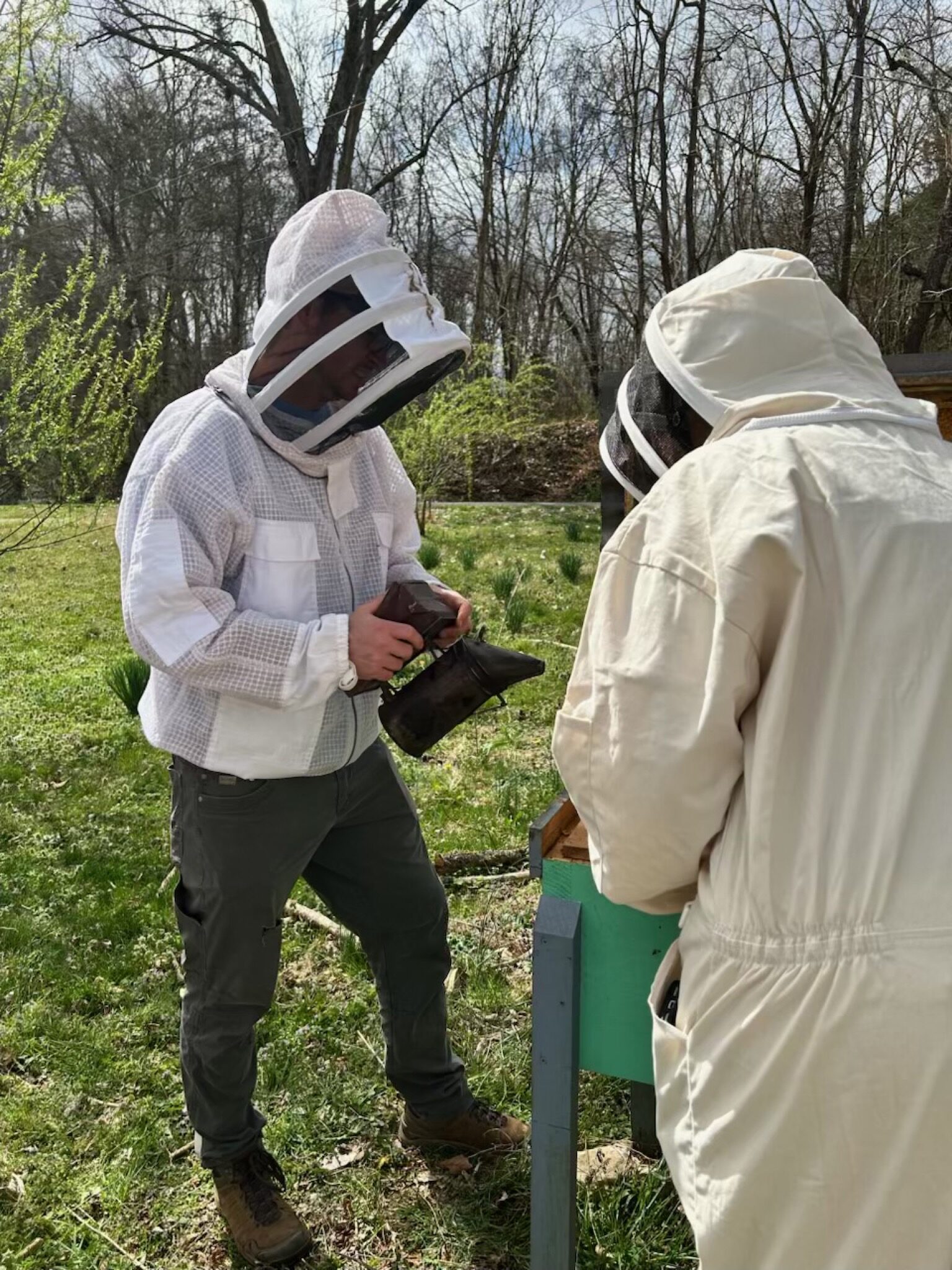
Stephen and I went to Beekeeper Bootcamp this past weekend, and it was a good time. Allow me to explain.
What is beekeeper bootcamp?
It’s pretty much like what you expect- take a bunch of people, and teach them the basics in a crash course over a weekend at his home in middle Tennessee.
What we learned is that there are two ways to keep bees. The traditional method involves putting bee hive boxes one on top of the other, ordering some bees, keeping them in your hive and feeding them sugar water throughout the year to give them the energy they need. This can also mean inspecting the hives many, many times a year for the parasitic bugs called Varroa mites. Plastic honey comb, spraying to kill varroa mites, and generally pissing the bees off so they try and “swarm” (which means “run away”). The success rate of this approach by lasting through the winter is about 50%.
This bootcamp teaches another approach: beekeeping the natural way. This means catching a bee swarm locally instead of buying them online, not feeding them sugar water, not treating for verroa mites, and generally not messing with them nearly as much in horizontal beehive boxes instead of vertical boxes. There are no plastic honey combs for the bees to use. By using local bees, they are more evolved to survive the winter, already immune to verroa mites, and strong enough to not rely on being fed sugar water. In short, the goal is to reproduce the way bees live in the wild: they have good instincts that can be built upon. The success rate of this approach is 85%.
This natural approach has come with some serious drama in the beekeeping world that I won’t get into here, but the class is taught by Adam Martin, and he has written books on the topic.
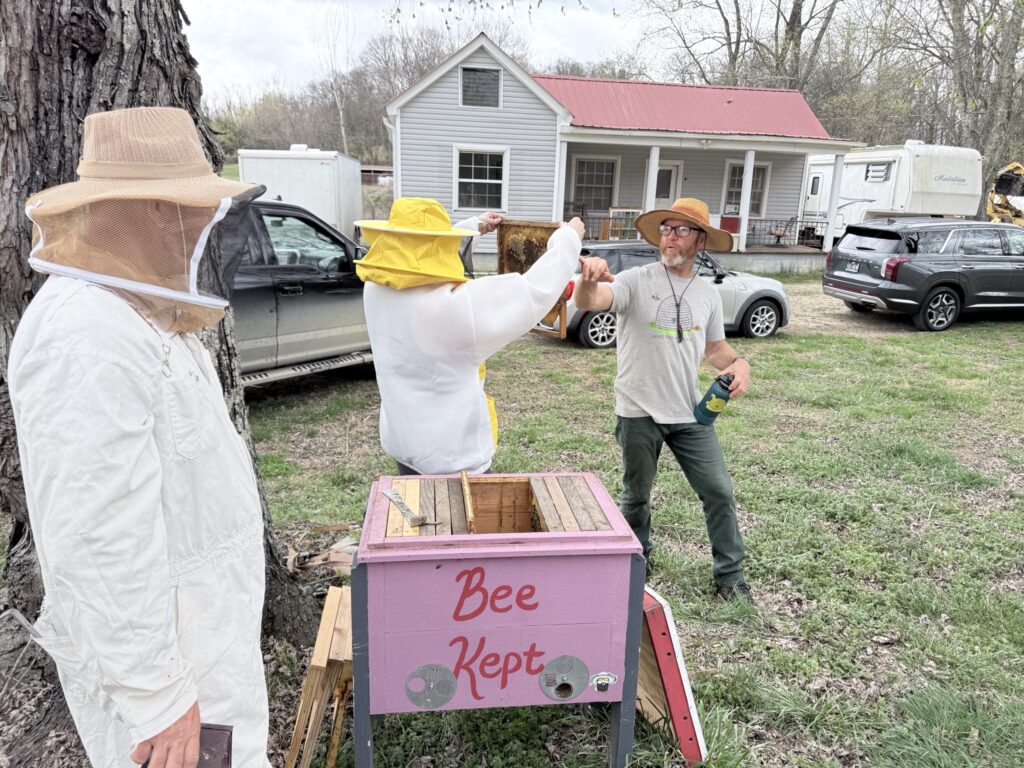
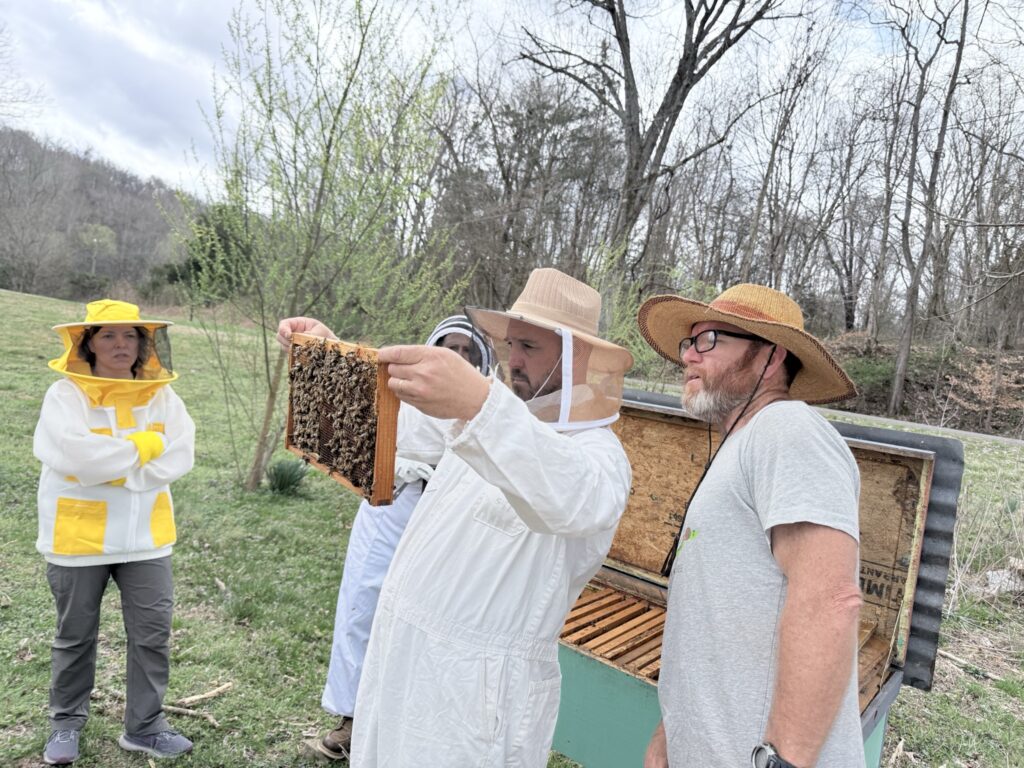
This course taught us how to go through a bee hive and inspect it for a few things: if they are growing properly, if they have food, a queen, and it taught us about the different types of beehives.
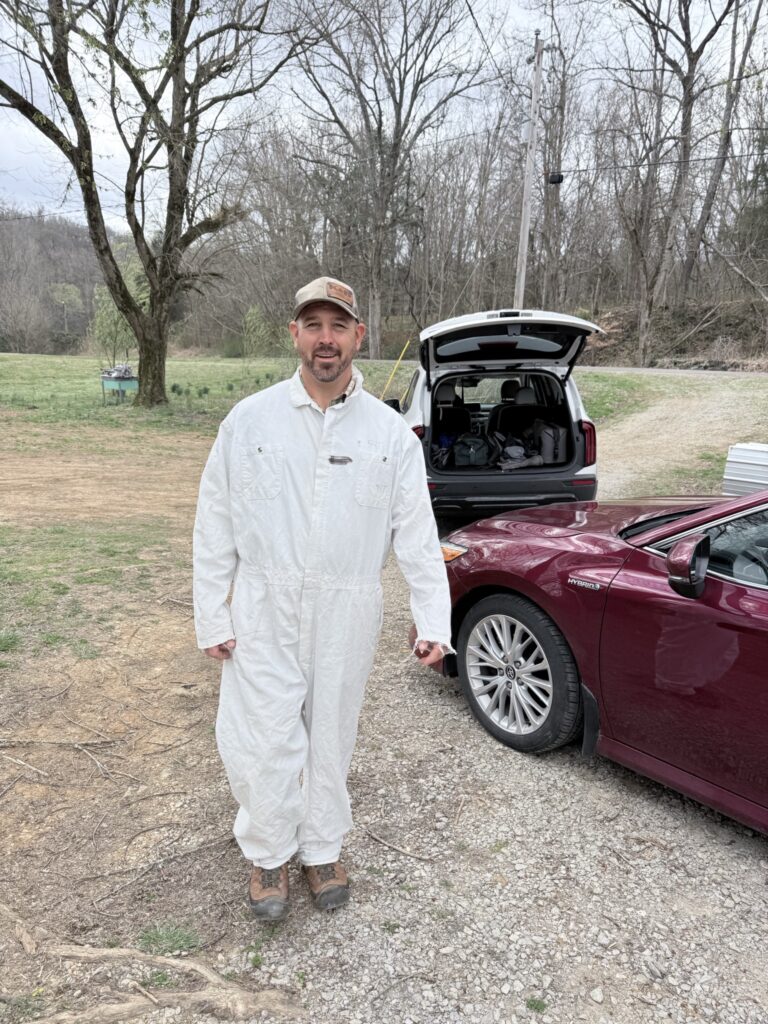
The picture above is Adam, without the bee suit. You might think he has balls of steel for doing this, and maybe he does. But if the bees are treated kindly and you dont move fast, dont wear red, and dont kill any bees, they are generally pretty happy, and wont try and sting you. I picked up a bee frame with bare hands and didnt get stung.
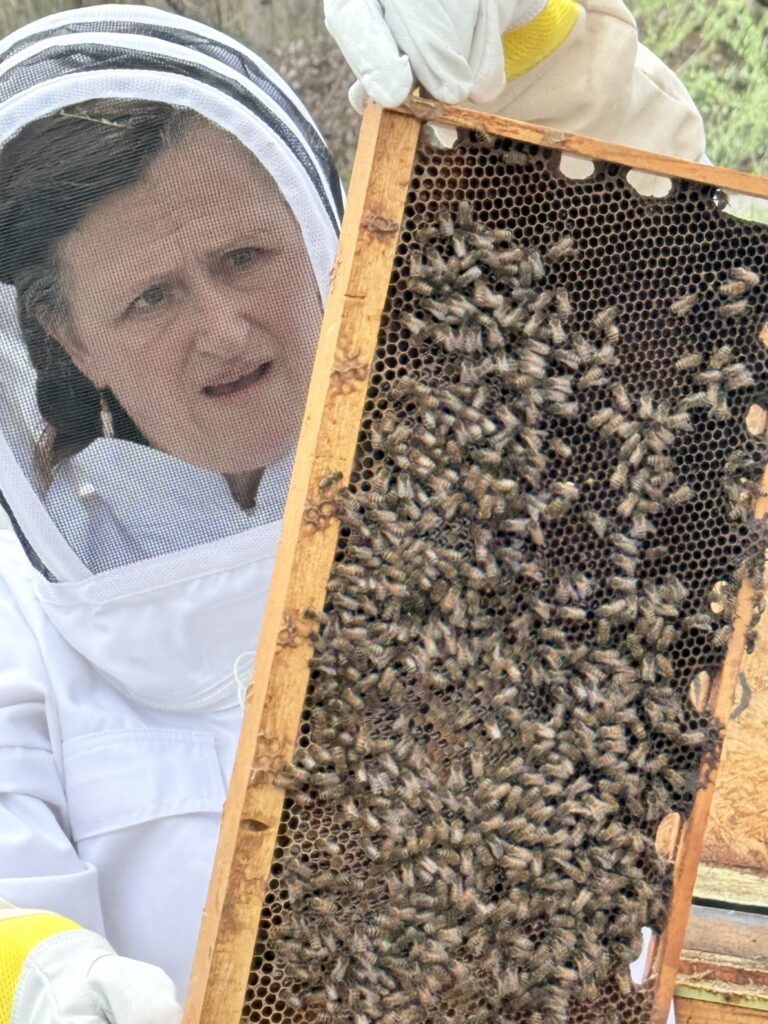
We each got a chance to be hands-on. Adam was an awesome teacher on this- it is something he really cares about.
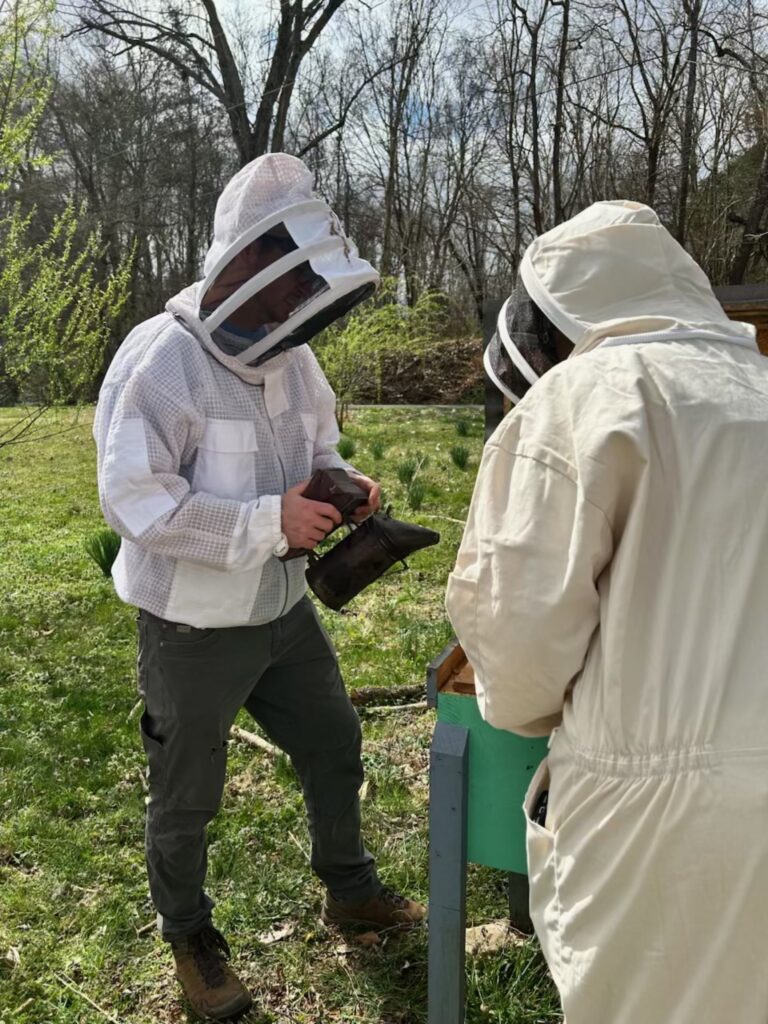
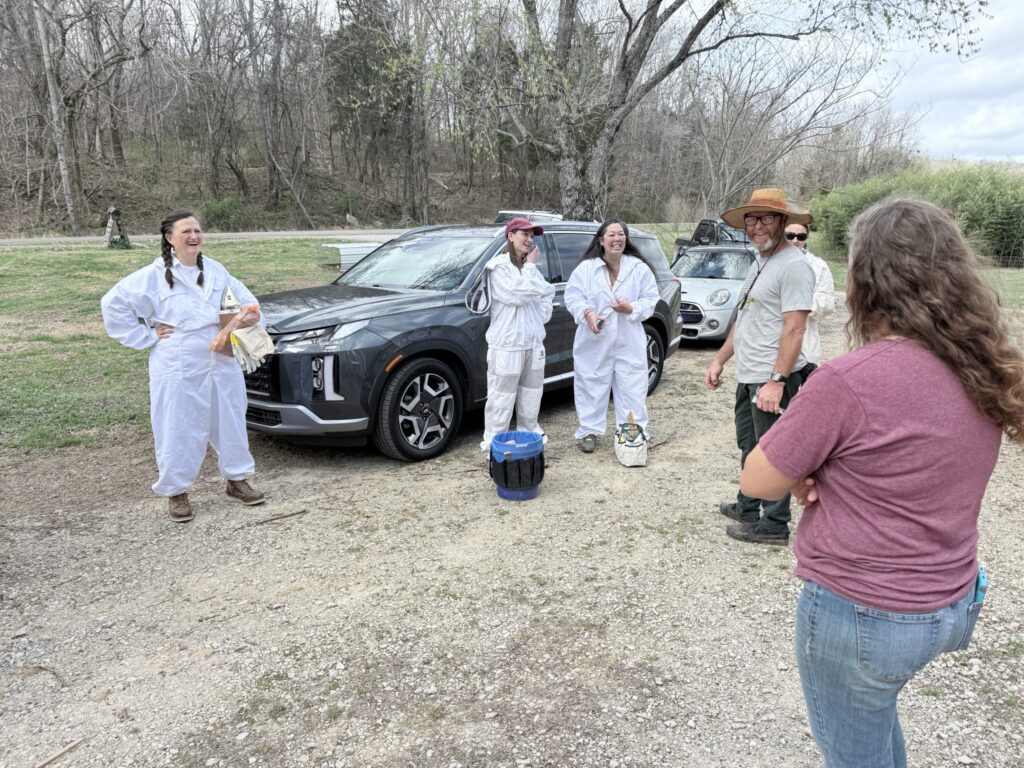
I don’t really know how to preface these pictures, but here are a few more of us in the class doing the hands-on part:
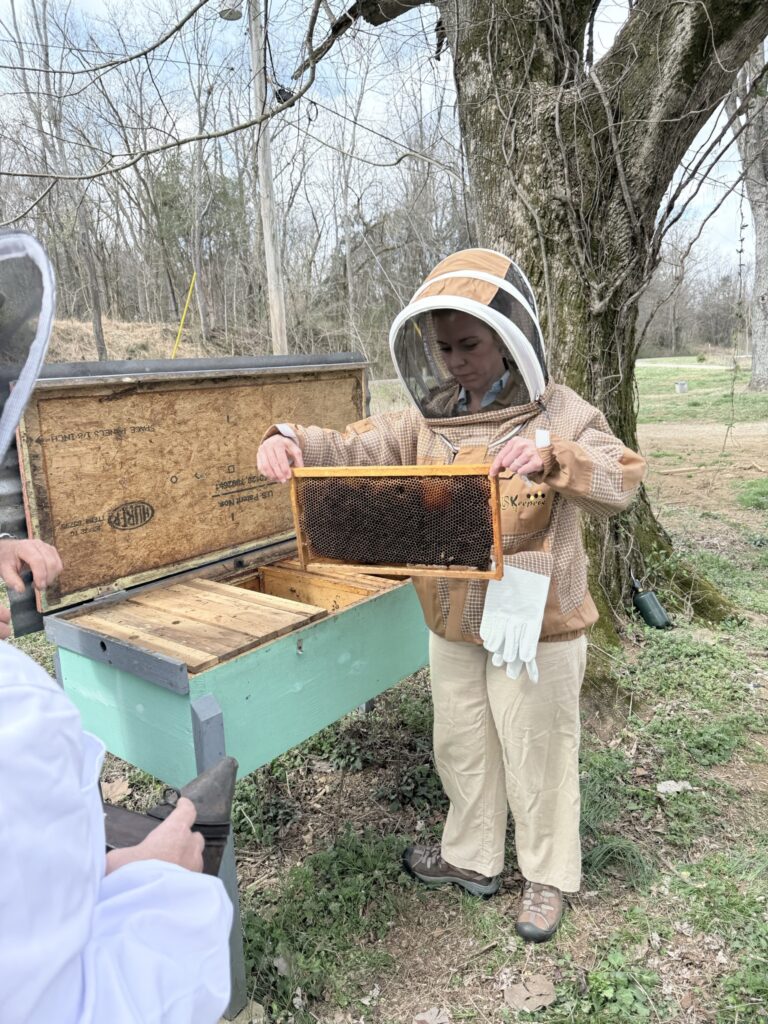
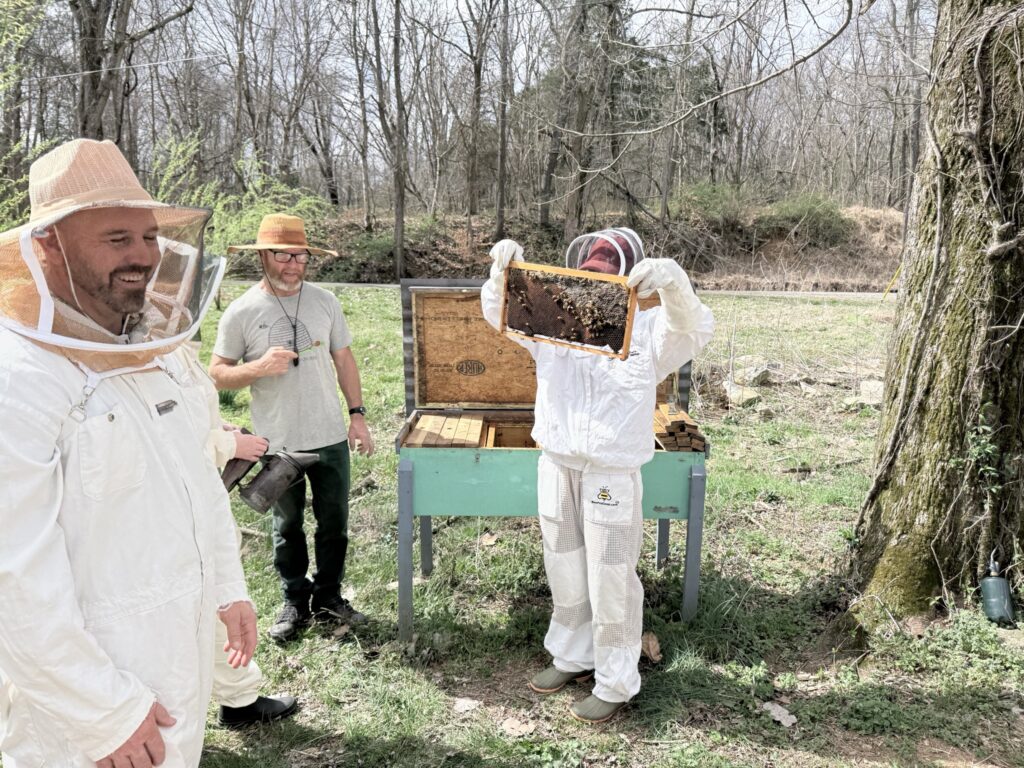
Adam built this niche world in apiary and sells beehives and focuses on the education aspect. He sells his honey for $40/quart, and champions the healthy aspects of local honey: he hasnt had a cold in 5 years.
His wife, Leslie, went to elementary school with my friend Steven back in California before they began their homesteading/beekeeping operation- which was a beautiful site to be see. I was intrigued and wanted to learn more, but time was short.
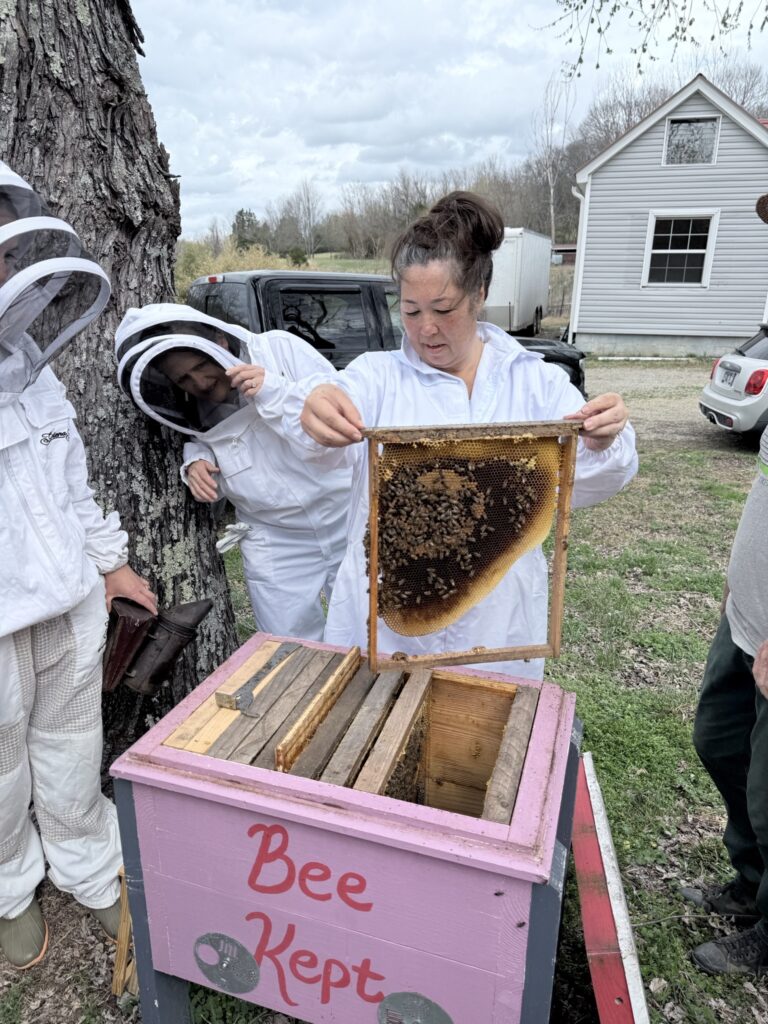
Besides Adam, there is another person in Missouri that also champions the natural approach to bees: Dr. Leo Sharashkin, a true Russian, who has been successful in his own rite. His focus was on horizontal hives (as opposed to vertical) because they are easier to handle than vertical hives, which can weight 85 pounds, and each need to be moved and rearranged several times a year. Bees are often killed in this process, which pisses them off, and they swarm and sting whenever this work is performed. The natural way (as seen in the pictures), means there is a good chance the bees wont get bothered at all.
But why did you do bee camp?
This, too, is a very good question to ask. Our church, an Anglican Church here in town, has a farm and several other ministries on site. The farm had bees a few years ago, but I hadn’t seen them in a while so I asked Steven, the farm director about them.
If you know Steven, you know he has a great deal of joy- so when asked about the bees, he responded with an immediate invitation to beekeeping bootcamp- and who says no to that? So, we registered, got a small airBnB, and went.
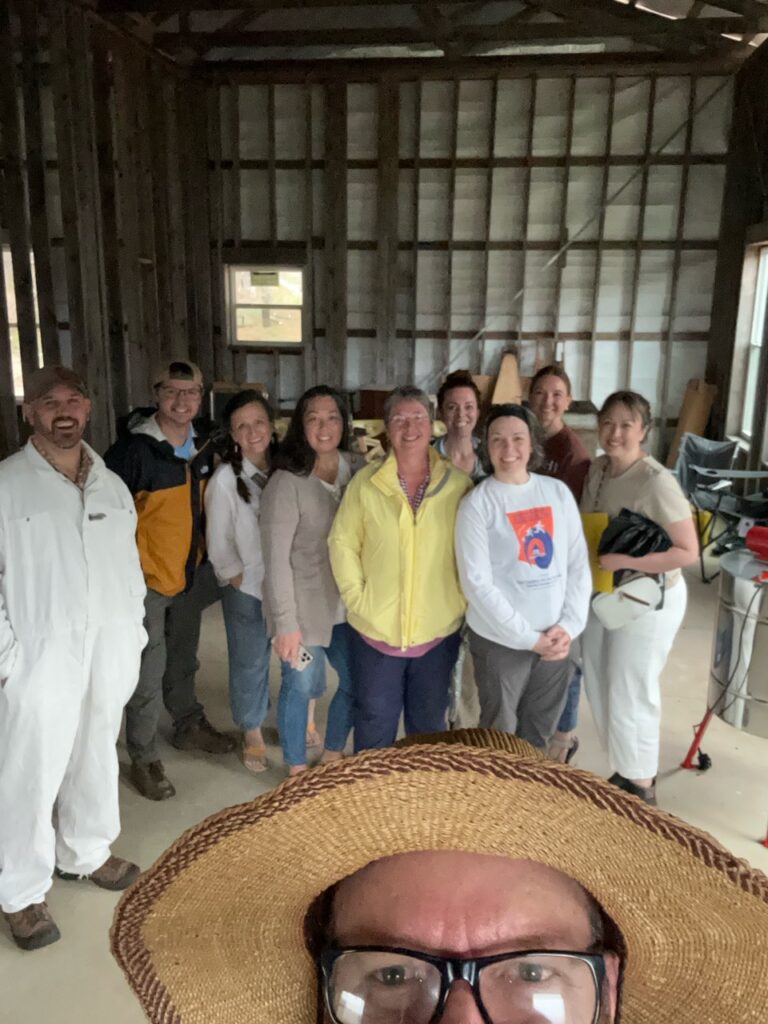
Where did you stay, and now what?
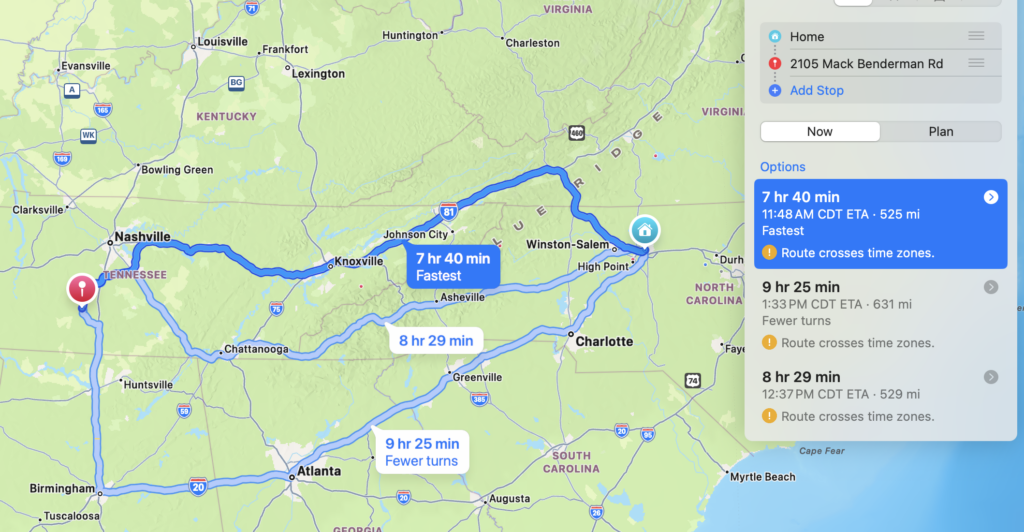
No, it didn’t make sense to do a drive like this- it was madness, but I really enjoyed spending time with Steven. We talked about every topic under the sun and are kindred spirits when talking politics, theology, parenting, and a whole lot of other stuff I wont get into here.
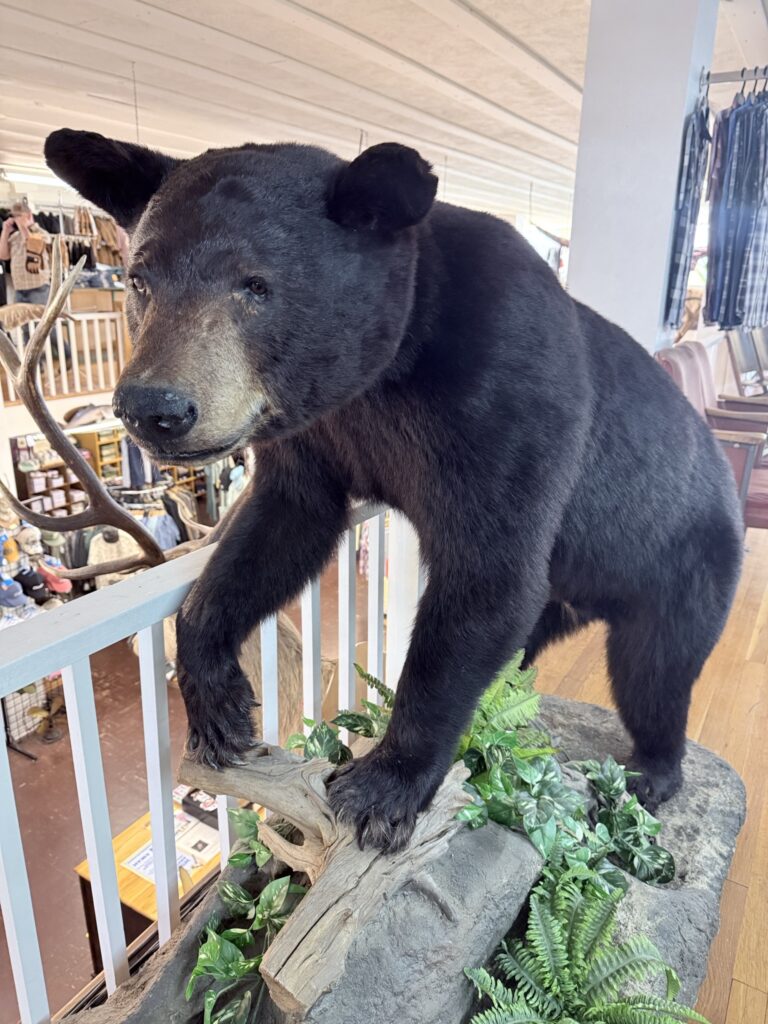

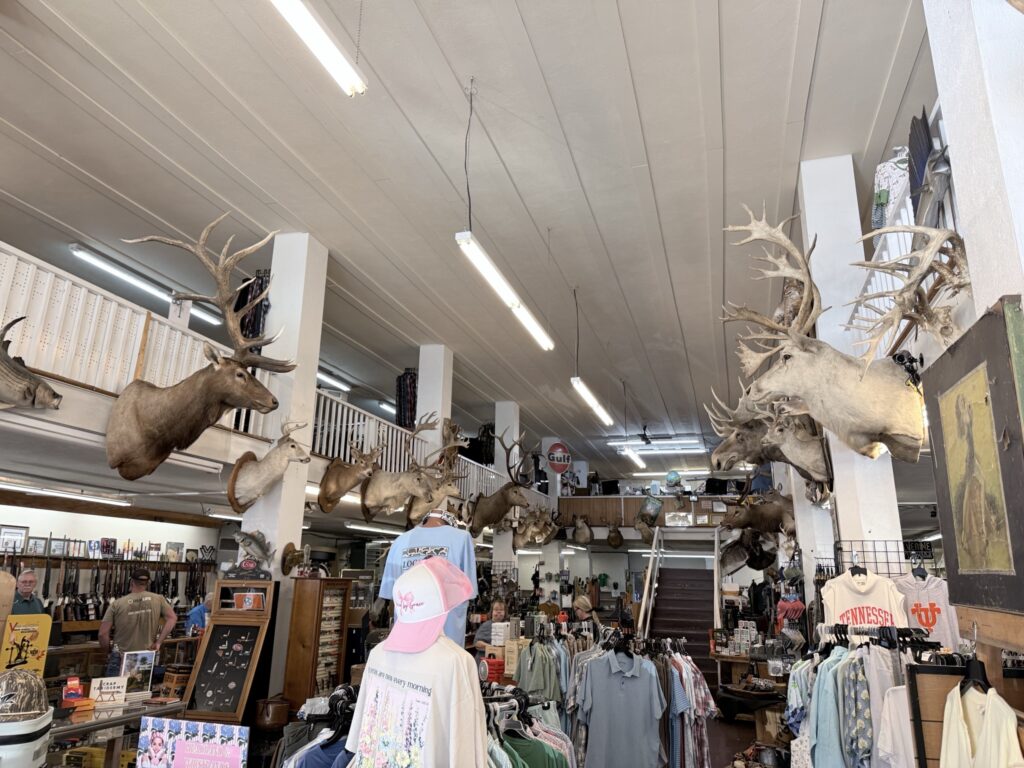
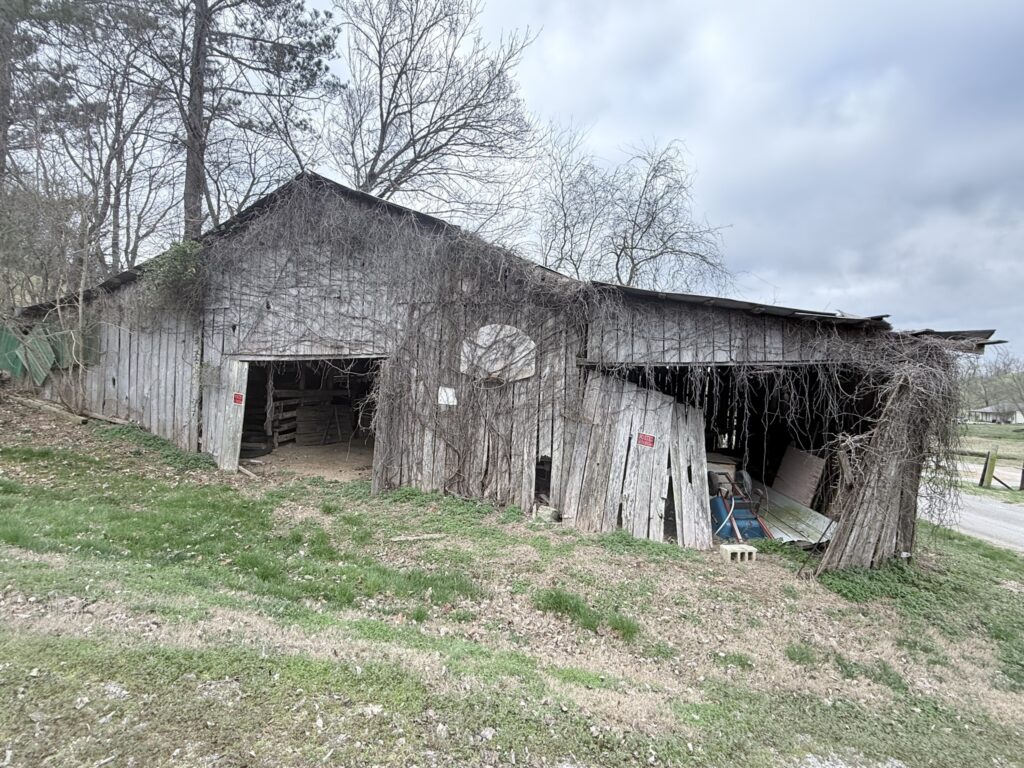
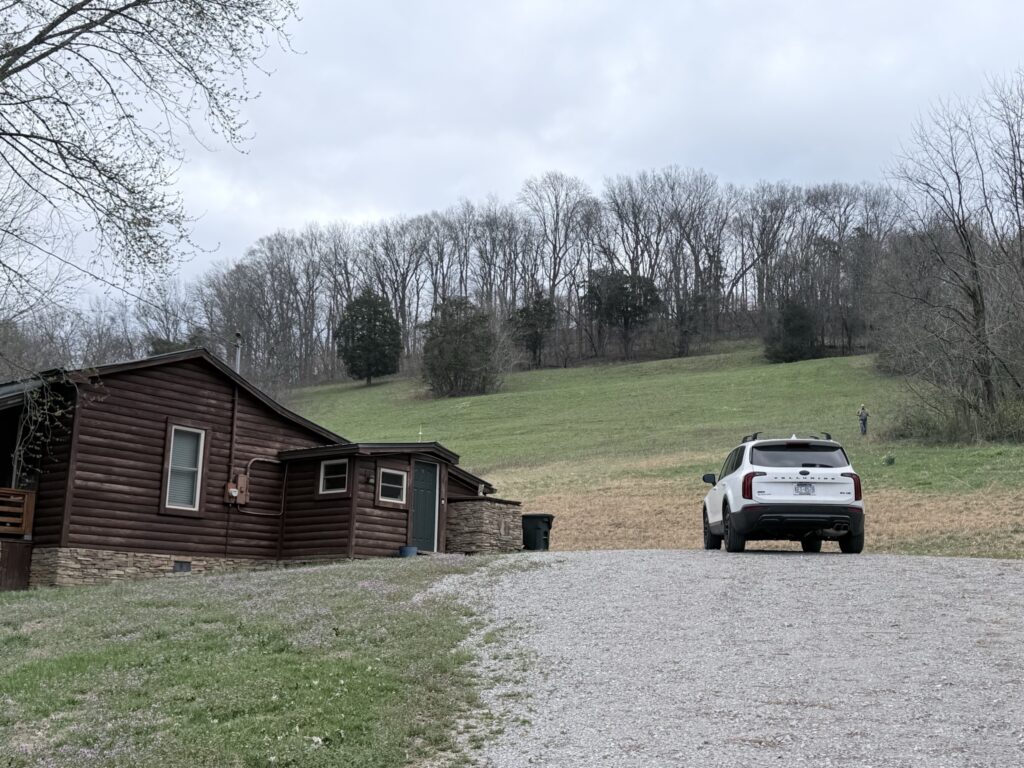

We stayed in a place a few minutes away- and I kid you not, out of all the places I have been in Costa Rica, upstate New York and Italy, no area had worse cell phone service for our Verizon phones than this area of Tennessee.
The little town just north, Columbia, was awesome- seems like it is the new town growing on the heels of Nashville’s success.
We made it home safe and sound after a unique weekend.
Now that Steven and I have done the course, the next goal is to catch a swarm over the next 10 days or so- which means putting a “trap” in a tree about 15-20 feet off the ground- which is great for a person who is still mildly afraid of bees and heights. Stay tuned!
Leave a Reply